Start with the material.
6 standard materials · 2 PCL-based specialty filaments
페이지를 불러오는 중

For healthcare professionals & businesses · No consumer sales
Actual GLOONE filament production footage
6 standard materials · 2 PCL-based specialty filaments
6 standard materials · 2 PCL-based specialty filaments
PCL · PLLA · PP · PDO · PLCL · PLGA. Our filament manufacturing experience helps match material, purpose and processing.
Simplified structural diagram. It does not specify copolymer sequence, composition ratio or resin grade.
Standard filaments · 6 materials
A comparatively flexible, extensible polyester. It tends to degrade slowly and melts at a lower temperature than PLLA, so heat exposure needs careful review.
These are general polymer characteristics. Actual filament properties, degradation and processing temperatures depend on grade, diameter, drawing and test conditions. Melting point is not a safe service temperature or the onset of deformation.
Explore VC PCL and PDRN PCL as distinct products. Review their material and appearance, then discuss your specifications.
The addition of vitamin C tends to give the filament a slight yellow tint.
Discuss this filamentAn orange tint with an appearance close to apricot.
Discuss this filamentIllustrative color reference, not a product photograph. On-screen colors may differ from the actual material.
Discuss supply specifications by material, target diameter, strength and downstream processing.
A comparatively flexible, extensible polyester. It tends to degrade slowly and melts at a lower temperature than PLLA, so heat exposure needs careful review.
Discuss this filamentGenerally stiffer and less flexible than PCL, with a higher melting point. Deformation can still occur below melting; crystallinity, drawing and heat treatment affect practical heat resistance.
Discuss this filamentA polyolefin that does not readily hydrolyze in ordinary moisture conditions. Diameter and drawing affect strength and flexibility; heat and UV exposure can cause aging.
Discuss this filamentA degradable polymer generally more flexible than PLLA. Thermal and moisture sensitivity make drying, melt temperature and residence time important processing considerations.
Discuss this filamentA copolymer of lactide and caprolactone. Its ratio and structure can provide greater flexibility than PLLA while also changing thermal and degradation behavior.
Discuss this filamentA lactide–glycolide copolymer. Composition, molecular weight and end groups affect degradation and processing; moisture control and thermal history should be reviewed together.
Discuss this filamentIllustrative color reference, not a product photograph. On-screen colors may differ from the actual material.
| USP size | Metric code | Average diameter (mm) |
|---|---|---|
| 7-0 | 0.5 | 0.050–0.069 |
| 6-0 | 0.7 | 0.070–0.099 |
| 5-0 | 1 | 0.100–0.149 |
| 4-0 | 1.5 | 0.150–0.199 |
| 3-0 | 2 | 0.200–0.249 |
| 2-0 | 3 | 0.300–0.349 |
| 0 | 3.5 | 0.350–0.399 |
| 1 | 4 | 0.400–0.499 |
| 2 | 5 | 0.500–0.599 |
A shared diameter comparison, not GLOONE supply tolerances or test results for a particular PLLA/PCL filament. The EP column refers to absorbable monofilaments; the same size label can have different diameter limits under different standards.
Specify material, pharmacopoeia and edition, size, average diameter range and individual tolerance when ordering. Example: USP 3-0 / average diameter 0.200–0.249 mm. Actual supply limits are agreed separately.
PP is nonabsorbable; PDO, PLLA and PCL are absorbable materials. Confirm knot-pull criteria and test conditions separately. Material names alone do not establish absorption time or strength retention.
Needle gauge and thread USP describe different dimensions. Confirm post-COG dimensions and needle/cannula combinations from model documentation.
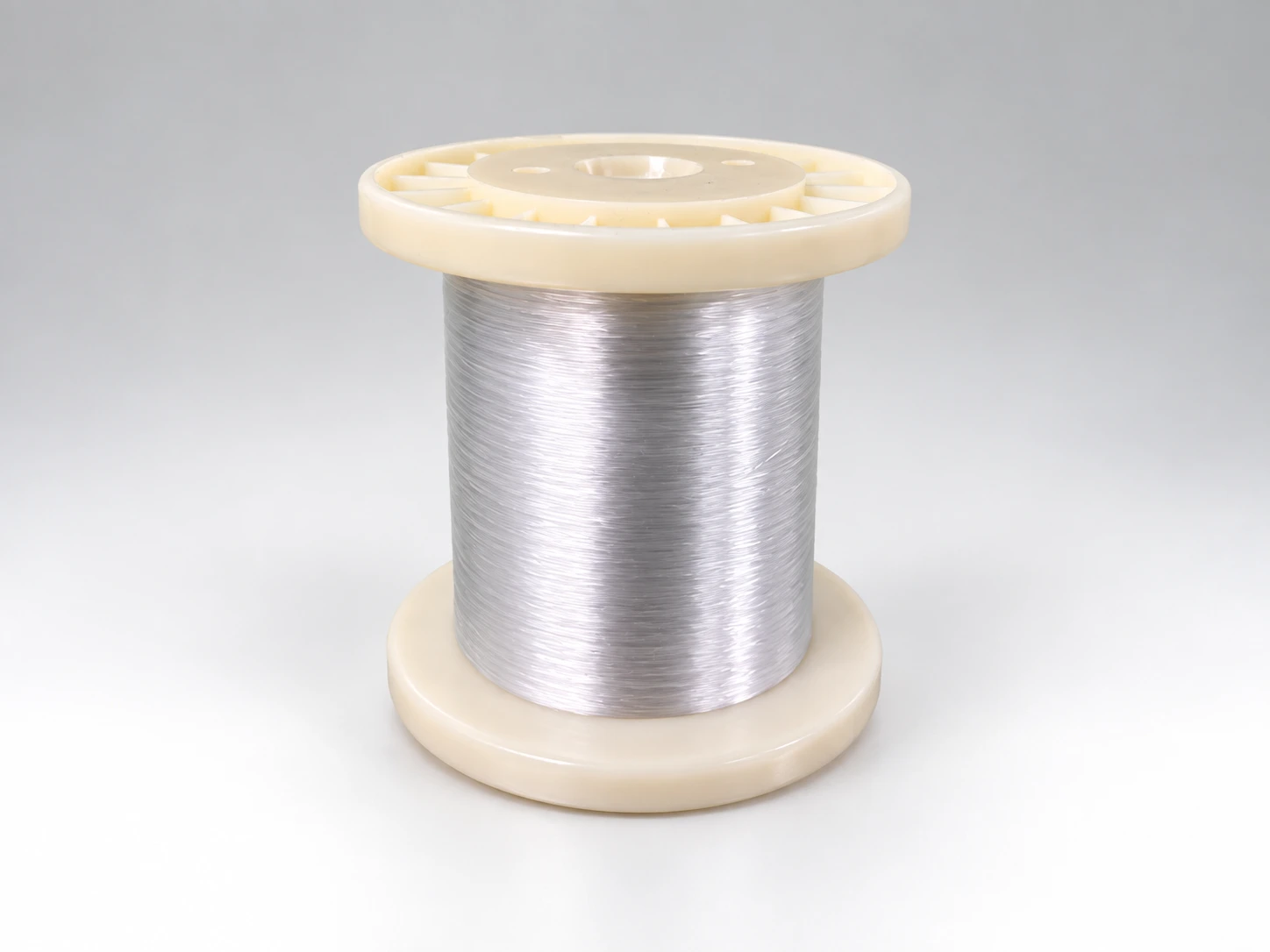
Diameter comparison source · CHIRMAX / USP–EP ↗Monofilament wound on bobbins. Samples and processing scope are discussed against the requested specification.
Duration is meaningful alongside test conditions and endpoints. Material-specific periods are discussed using verified test records.
Composition, grade, diameter and processing history
Temperature, medium, pH and observation points
Tensile-strength retention, mass change and molecular-weight change
Connect the material and product form with the specifications and supply conditions your project needs.
Identify the polymer and the product or process it will be used in.
Review product information against target dimensions and the required form.
Define sample review, quantity, timing and the documents you need.